BRITISH SCIENCE WEEK 2027 · 5–14 MARCH 2027
ABC Science
British Science Week
Turn a £600 Curiosity Grant into a lasting improvement in primary science.
Amazing practical science. Confident teachers. Curious children. Equipment your school keeps.
Creativity: the power of ideas. Practical science that lasts beyond one extraordinary week.
Grant applications close 5pm, Wednesday 4 November 2026. Schools apply directly to British Science Week.
The ABC Science £600 school package
This isn’t just a box of science equipment.
It is everything your teachers need to turn exciting practical science into confident, purposeful classroom investigation.
Brilliant practical science kit
Reusable equipment for memorable demonstrations and pupil investigations.
Whole-day hands-on CPD
Teachers investigate, question, predict and measure—then learn how to recreate the activities confidently with pupils.
How-to videos
Accessible demonstrations showing how to set up and run the activities.
Complete lesson resources
Teacher lesson plans, PowerPoints, pupil investigation resources and supporting materials.
Risk-assessed practical science
Activity-specific risk assessments and clear guidance for appropriate, confident practical work.
AND MOST IMPORTANTLY…
Your school keeps the kit.
During Science Week. Next term. Next year. For future classes of curious children.
Proposed package: final equipment selection and supplier pricing are being confirmed. Every proposed cost must meet the grant’s eligible-expenditure rules; funding and package availability are not guaranteed.
A little box. A world of discovery.
Lift the lid on real science.
Take a closer look at the practical equipment, models and specimens that bring an ABC Science box to life.
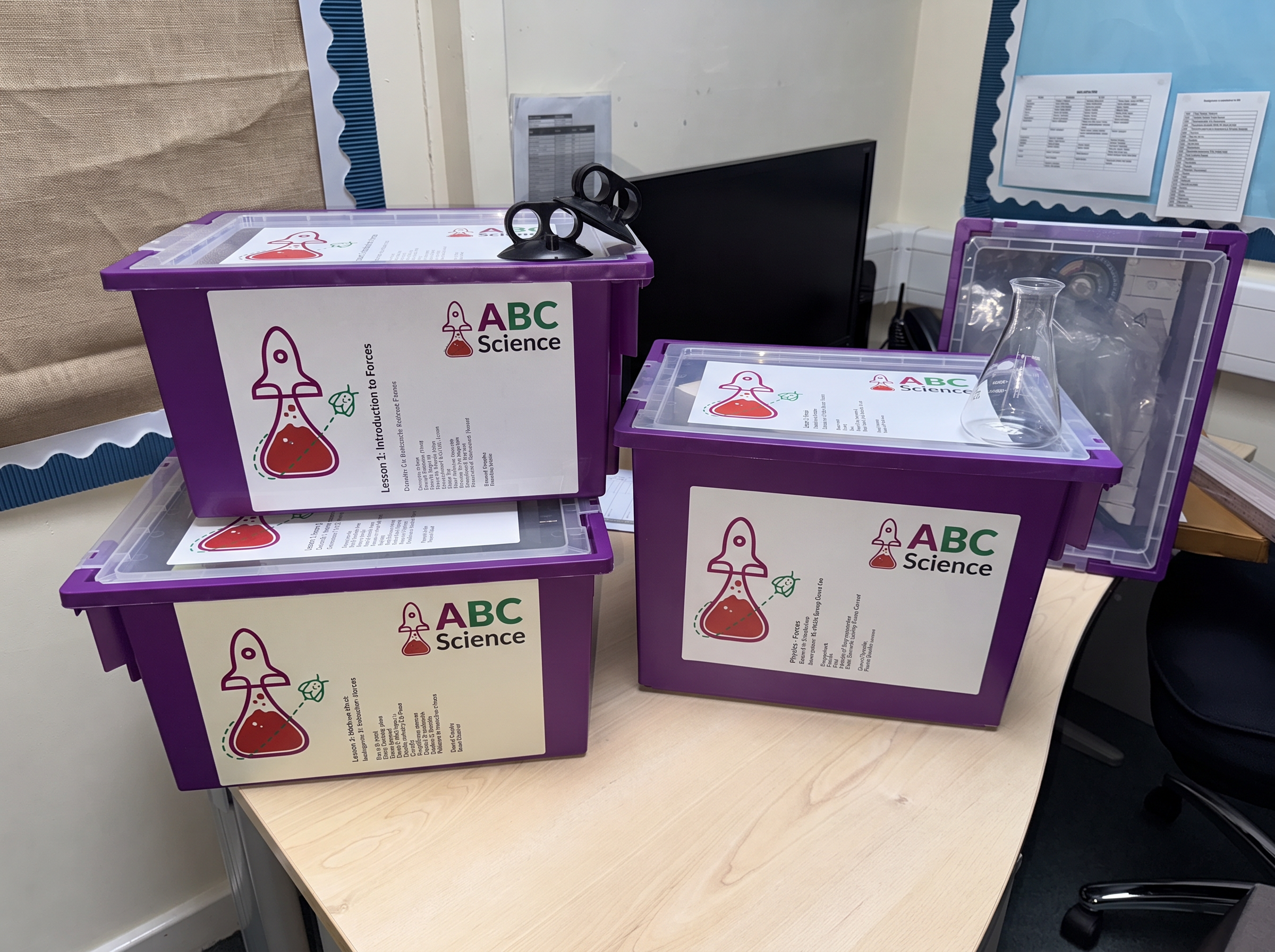
PACKED WITH POSSIBILITY
Not just equipment. Inspiration.
Reusable kit, ready for demonstrations and pupil investigations—and kept by your school.
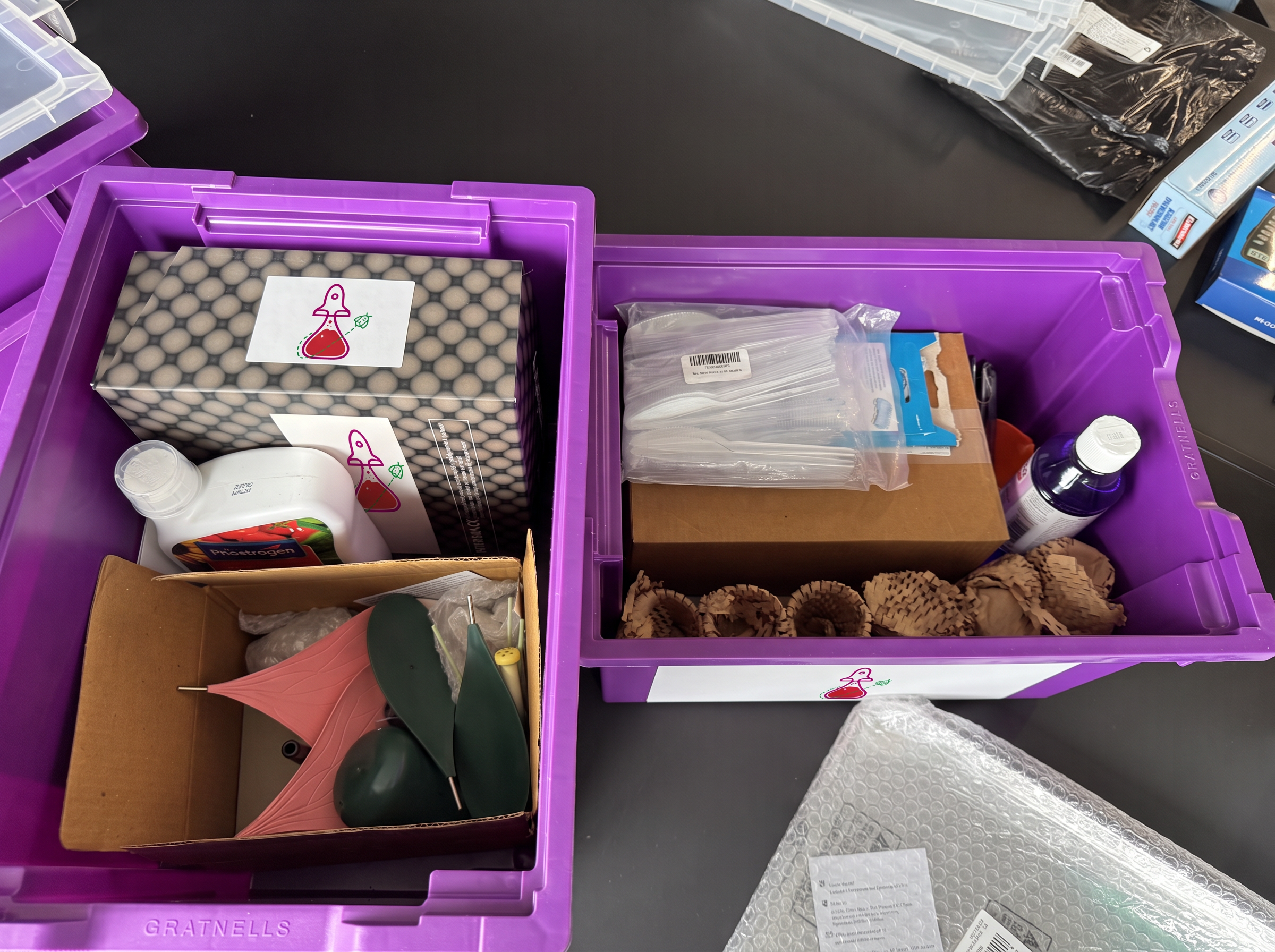
OPEN IT. EXPLORE IT. INVESTIGATE IT.
Small things. Big questions.
The box planner explores subject-themed or mixed sets, with ideas for five separate Science Week lessons and beyond.
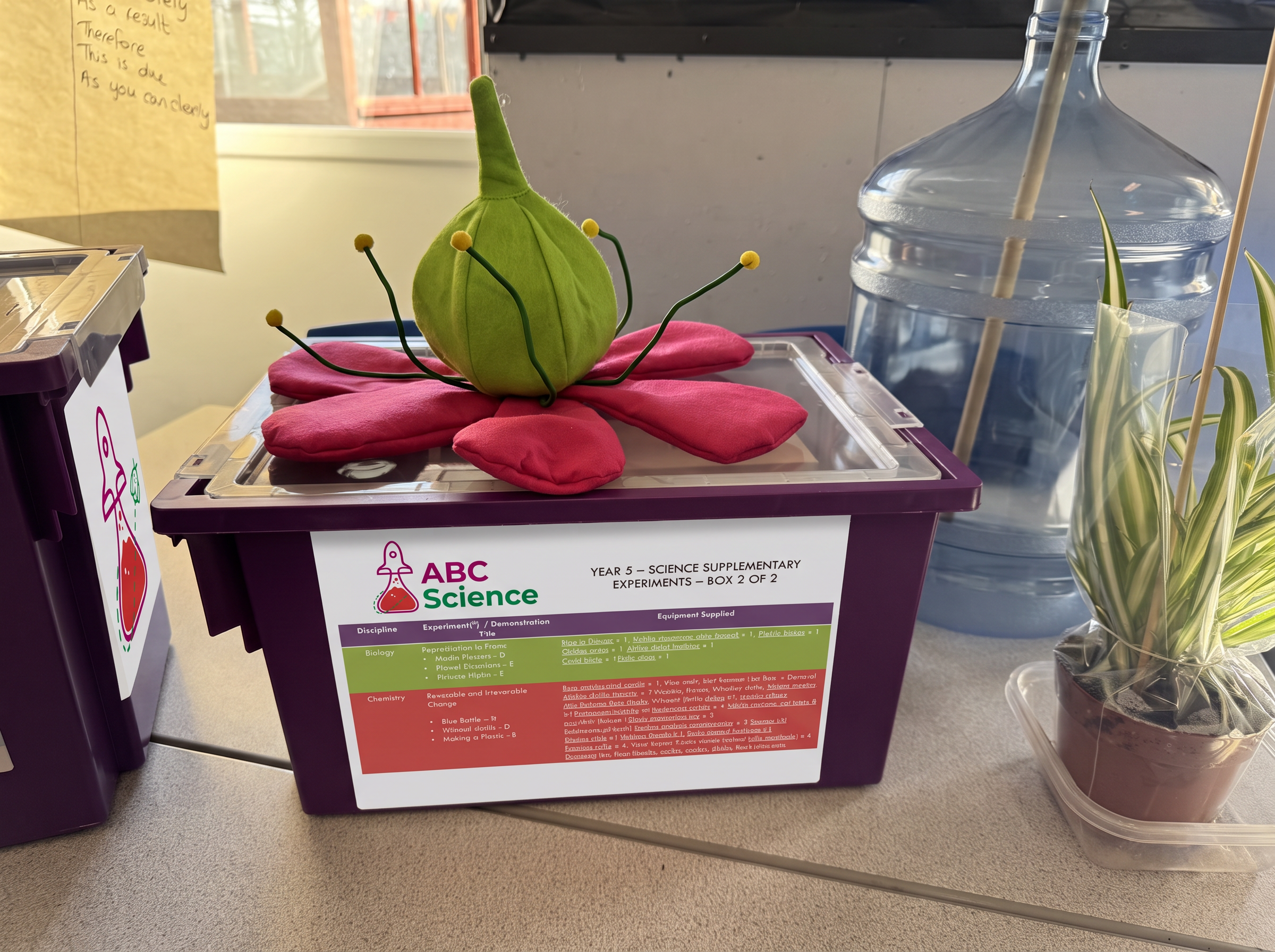
Biology
Bring living things to life
Models and real-world observations make the natural world something children can explore.
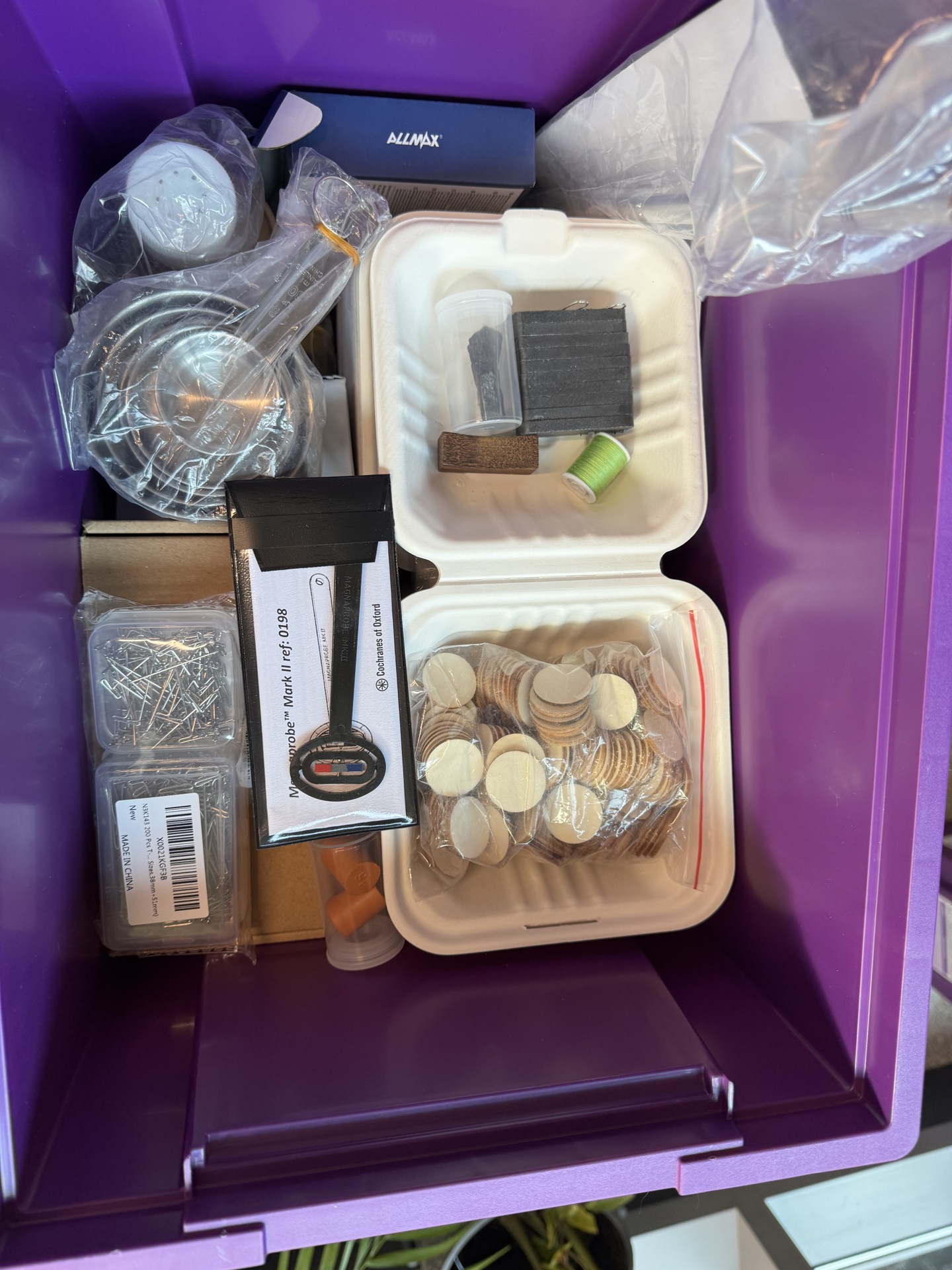
Physics & chemistry
Get hands-on with materials
Practical apparatus and materials turn questions into tests, comparisons and discoveries.
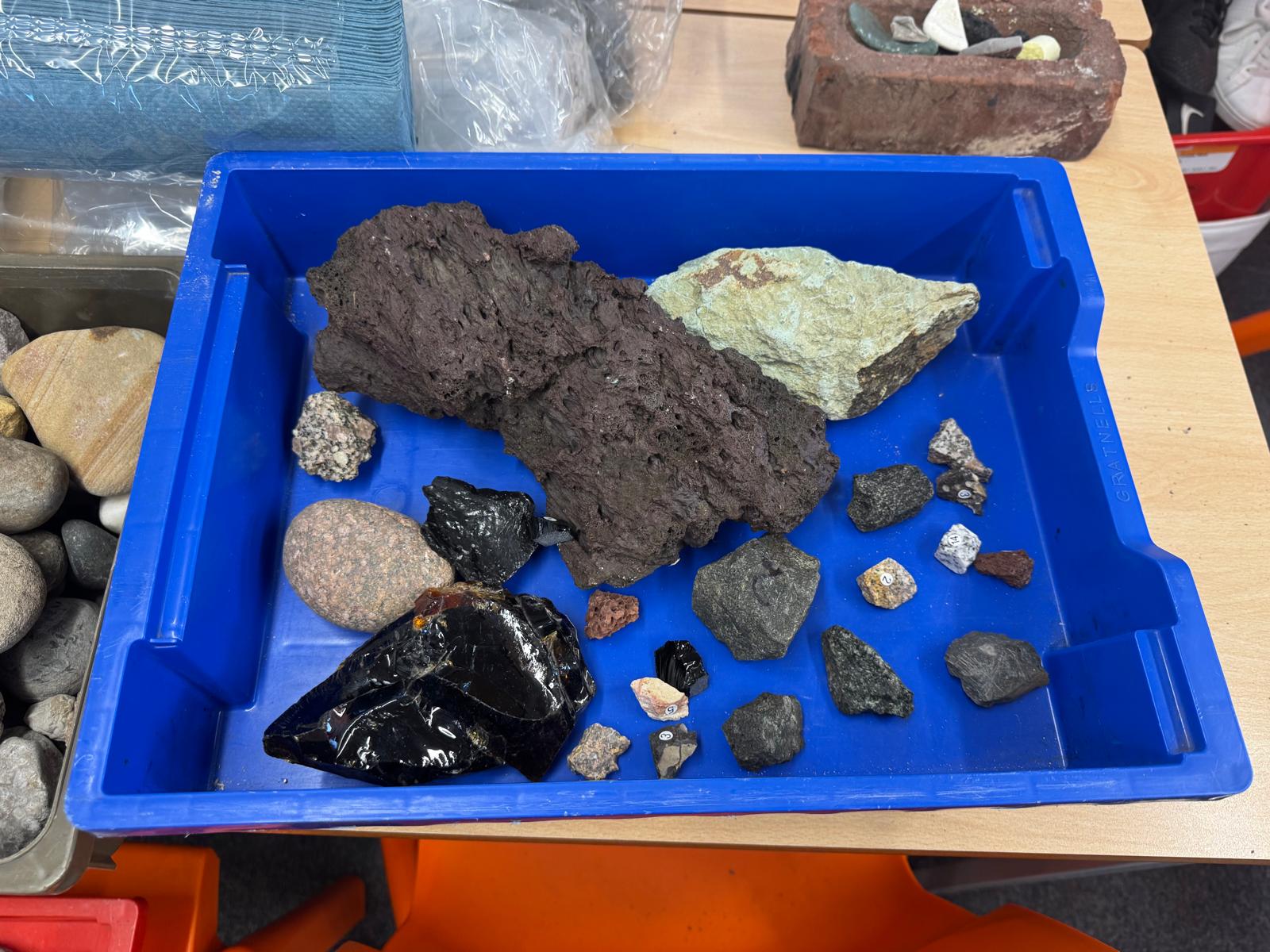
Geology
Discover the world beneath us
A proposed mineral-testing kit and specimens for close observation, comparison and investigation.
THE SUPPORT THAT COMES WITH THE BOX
- Whole-day hands-on CPD
- How-to videos
- Lesson plans & PowerPoints
- Investigation & follow-up resources
Illustrative kit photographs, with ABC Science branding added. These show examples of our practical resources, not a confirmed Science Week packing list. Final box contents and format are being developed.
Explore the experiment ideasWE BELIEVE CHILDREN SHOULD DO SCIENCE
“WOW!” is where science starts.
Why did that happen? What could we change? How could we test our idea? Every activity turns an exciting phenomenon into a chance to think like a scientist.
- Wow
- Wonder
- Question
- Predict
- Investigate
- Explain
- Evaluate
Open the science box
What might your children investigate?
A selection from our British Science Week box planner. The final box is being developed with Lascells and teacher feedback—not every activity below is a confirmed inclusion.
FORCES · PRESSURE · CREATIVE DESIGN
Questions that take flight.
Bottle rockets turn a spectacular launch into predictions, controlled variables and measurements. Teachers lead launches safely; pupils explore the evidence.
01Bottle Rockets
Explore forces, pressure and motion. Change a controlled design variable and compare the results.
Practical guidance: Outdoor, teacher-led launches using purpose-designed apparatus, eye protection and an exclusion zone.
02Cartesian Divers
Investigate pressure, floating and sinking. Compare diver designs and explain what changes when the bottle is squeezed.
Practical guidance: Robust plastic bottles and supervised stations; clear spills promptly.
03UV Beads
Make invisible ultraviolet radiation visible. Test which materials offer protection, using a fair comparison.
Practical guidance: Sun-safety and allergy controls; never look directly at the Sun.
04Smart Materials
Observe temperature-dependent magnetism and ask how scientists and engineers could use unusual material properties.
Practical guidance: Teacher-controlled magnets and warm water; consider medical devices and electronics.
05Thermal Conductivity
Compare how metals transfer thermal energy. Keep dimensions and starting conditions the same for a fair test.
Practical guidance: Smooth metal edges, controlled materials and spill management.
06Pulse Oximetry
Explore pulse, measurement and variation. Repeat readings and discuss what the data can—and cannot—tell us.
Practical guidance: Voluntary participation, hygiene and inclusion guidance. Not for medical diagnosis.
07Build a Stethoscope
Design, make, test and improve a device for detecting sounds from the body.
Practical guidance: Supervised scissors and cleaned equipment; do not share uncleaned earpieces.
08Soap Boats
Turn surface tension into movement. Change a variable, repeat your test and compare performance.
Practical guidance: Supervised detergent use, avoiding eye contact; manage spills.
09Walk-Along Flyers
Explore airflow, lift and forces. Test a design, refine it and see whether your changes improve flight.
Practical guidance: Clear walking space and supervised scissors.
10Vitamin C Investigation
Compare food samples using chemical testing, a fair method and evidence rather than guesswork.
Practical guidance: School-appropriate dilute reagents, eye protection and no tasting laboratory samples.
11Effervescent Poppers
Connect chemical change, pressure and forces. Investigate how reaction variables affect a launch.
Practical guidance: Outdoor, teacher-led launches with approved canisters, eye protection and an exclusion zone.
12Hero’s Engine
Explore action and reaction through jets and rotation, then use observations to explain the motion.
Practical guidance: Purpose-made apparatus preferred; any heat or steam is teacher-only and specifically risk-assessed.
13Periodic Table cubes
Explore elements using Periodic Table cubes. Compare symbols and atomic numbers, look for patterns and ask where familiar elements appear in everyday materials.
Practical guidance: Use age-appropriate models under teacher supervision; follow the school’s activity-specific risk assessment.
14Stirling engine
Observe how a temperature difference can drive an engine. Predict what will happen, watch the motion and discuss how thermal energy is transferred into movement.
Practical guidance: Teacher-led demonstration with suitable apparatus. Keep pupils clear of hot surfaces and moving parts, and follow the activity-specific risk assessment.
15Hour of Science: Carbon
Why do graphite and diamond behave so differently when both are carbon? Investigate pencil-drawn graphite wires, change one variable and use evidence to explain conductivity. Explore carbon-containing materials, the carbon cycle and climate, with a quiz and pupil investigation template.
Practical guidance: Use a tested, school-approved low-voltage circuit with appropriate current limiting. Soot, heating and limewater activities are teacher-led demonstrations subject to the school’s risk assessment; pupils must not blow through limewater.
Open the carbon lesson (PDF)Young scientists in action
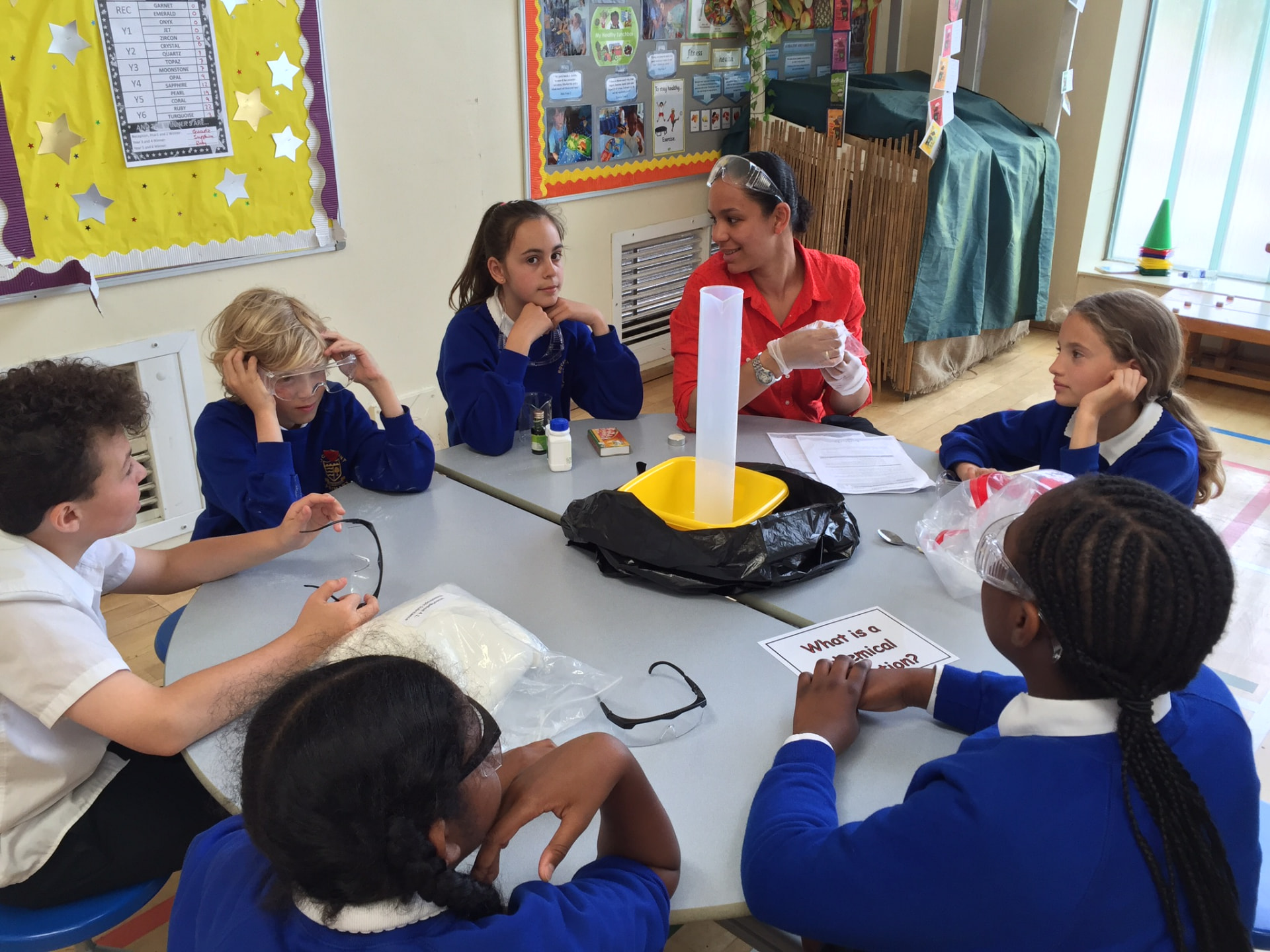
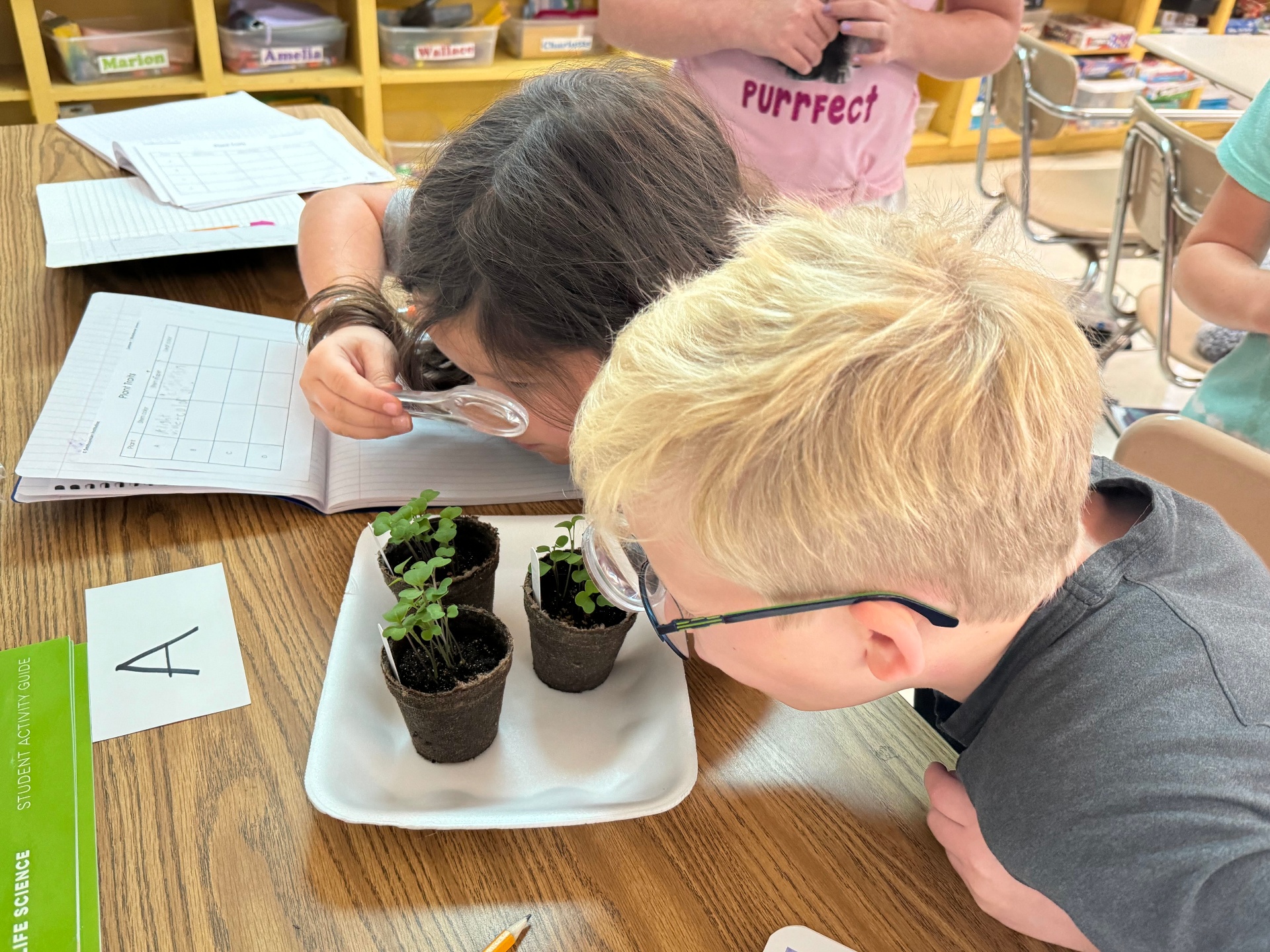
Curiosity comes alive in the classroom.
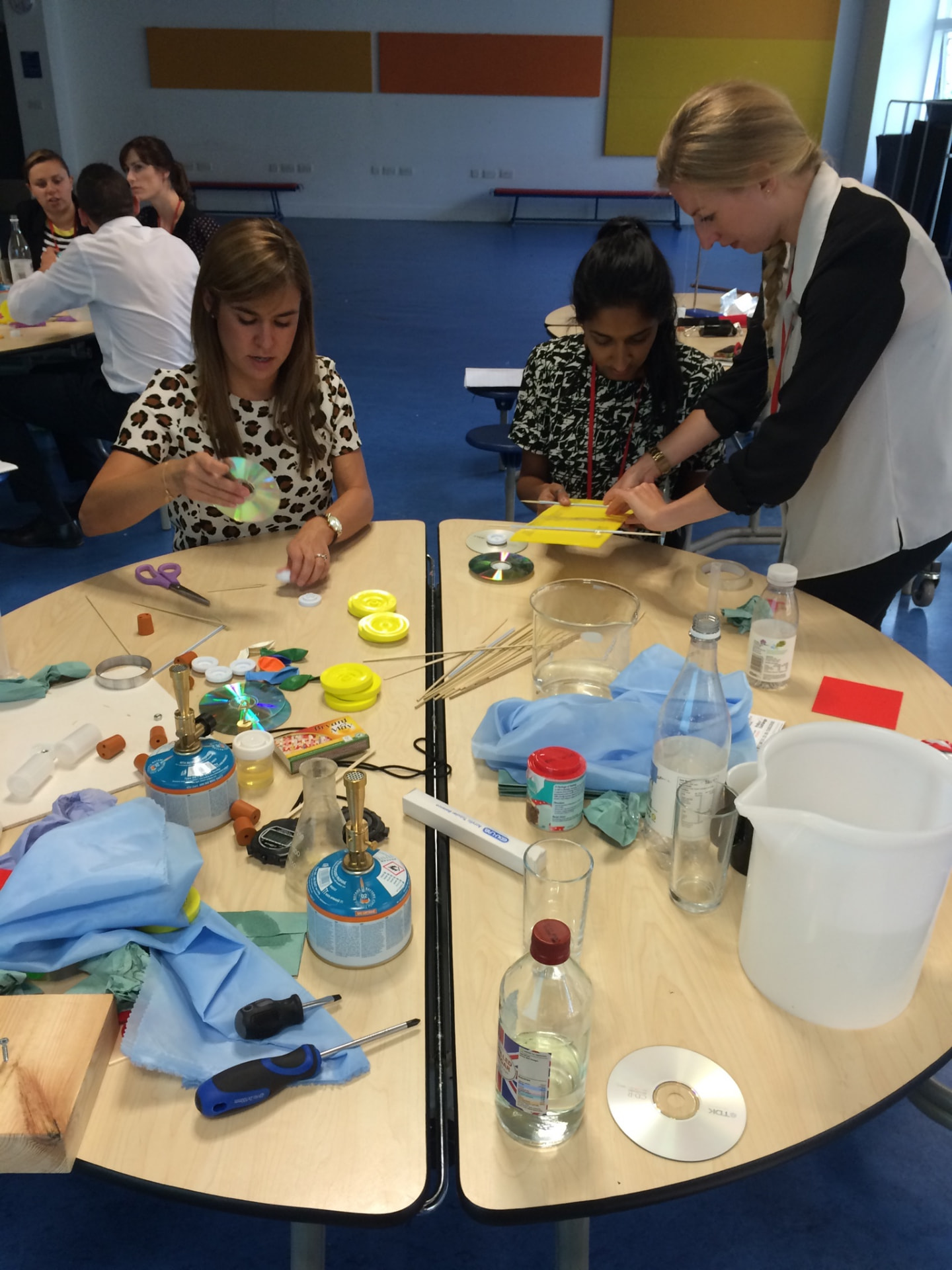
Observing, testing ideas and sharing discoveries—children exploring practical science with teacher support.


Not just great fun—great science
Built around the National Curriculum
Ask questions, make careful observations, measure, record data and draw conclusions. Repeated enquiries develop Working Scientifically alongside subject knowledge.
| Investigation | Working Scientifically | Forces | Materials | Light / UV | Animals incl. Humans | Design / Innovation |
|---|---|---|---|---|---|---|
| Bottle Rockets | ★★★ | ★★★ | — | — | — | ★★ |
| Cartesian Divers | ★★★ | ★★★ | ★ | — | — | ★ |
| UV Beads | ★★★ | — | ★★ | ★★★ | — | ★ |
| Thermal Conductivity | ★★★ | — | ★★★ | — | — | ★★ |
| Pulse Oximetry | ★★★ | — | — | ★ | ★★★ | ★★ |
| Build a Stethoscope | ★★★ | — | ★★ | — | ★★★ | ★★★ |
| Soap Boats | ★★★ | ★★ | ★★ | — | — | ★★ |
| Walk-Along Flyers | ★★★ | ★★★ | ★ | — | — | ★★★ |
| Vitamin C Investigation | ★★★ | — | ★★★ | — | ★★ | ★ |
| Effervescent Poppers | ★★★ | ★★★ | ★★★ | — | — | ★★ |
Stars indicate learning connections, not necessarily direct statutory programme-of-study objectives. The matrix follows the supplied brief; activities without a supplied mapping are omitted. Upper KS2 enquiries also develop decisions about variables, accuracy, repeat measurements and evaluation.
Read the statutory science curriculumReal teachers. Real equipment. Real practical science.
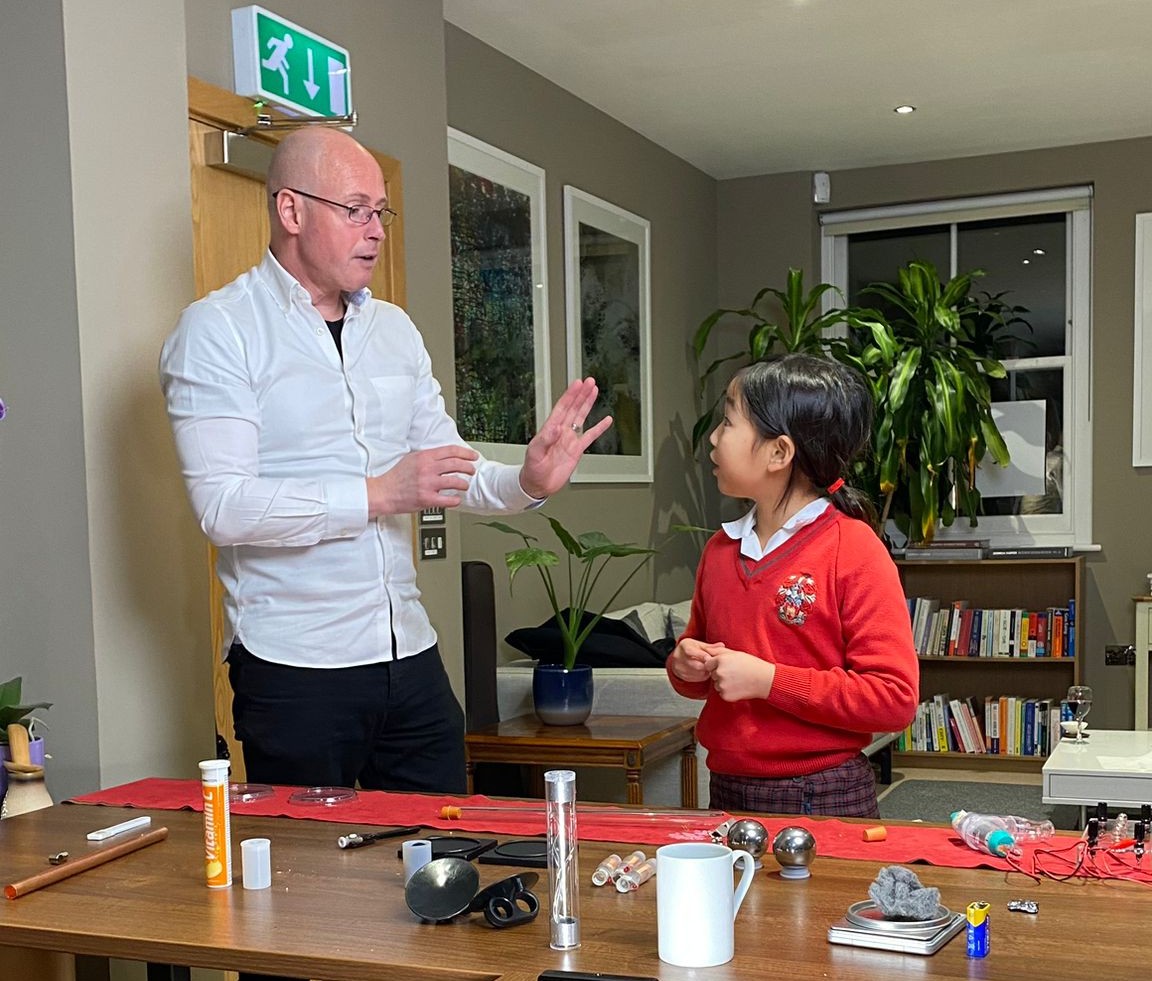
What happens when the box arrives? We open it together.
A full day of hands-on professional development where teachers become the scientists. Leave understanding how each experiment works—and how to turn it into meaningful scientific enquiry for children.
From one grant to years of science.
- 01
Reusable equipment
- 02
Confident, trained teachers
- 03
Whole classes investigate
- 04
Future pupils use the kit
Our initial Midlands 100
Disadvantage first. Lasting opportunity.
Our initial programme targets 100 state-funded primary schools across the East and West Midlands serving communities with high levels of economic disadvantage.
- 100
- priority schools
- 68
- West Midlands
- 32
- East Midlands
- 12
- local authorities
School selection uses DfE Free School Meals data. The current targeting list is not a confirmed beneficiary list: participation is subject to invitation and acceptance. Interested Midlands schools can register to discuss the Science Week package with Dan.
The £600 Science Week package is separate from the wider 12-month Midlands 100 funding proposition.
The Curiosity Grant
Research is something children should experience.
The official grant supports engagement with the skills, concepts, stories and people behind research and innovation, while helping schools embed those experiences in everyday learning.
- Research skills: questions, predictions, variables and evidence.
- Innovation: design, test, improve and solve problems.
- Pupil agency: children generate and investigate their own questions.
- Collaboration: plan, measure and interpret evidence together.
- Cross-curricular learning: mathematics, English and design.
- Participation: practical stations for whole-class involvement.
- Sustainability: reusable equipment remains in school.
- Teacher capacity: confidence and knowledge stay with the kit.
Is my school eligible?
The Curiosity Grant is a £600 cash grant paid directly to successful schools. Primary schools can apply if they meet the British Science Association’s definition of a school in challenging circumstances.
Published guidance notes that funding priorities may be more readily met by pupils aged 11+ or working at that level. Primary applications should clearly explain meaningful engagement with research and innovation.
ABC Science does not award the grant and cannot guarantee a successful application.
Your school applies directly, controls any awarded grant and remains responsible for its application. Equipment must be essential to the activity; large equipment and normal school salaries or running costs are excluded. Check the current guidance before budgeting for kit or CPD.
We’ll help you make the case.
We can explain what pupils will investigate, the research and innovation skills developed, curriculum connections, teacher support and what equipment remains in school. Contact Dan for accurate programme information to support your application.
Still curious?
Could £600 change practical science in your school?
Better-equipped classrooms. More confident teachers. Future investigations. Children who see themselves as scientists.
Applications close 5pm, Wednesday 4 November 2026. British Science Week: 5–14 March 2027.
ABC Science is a programme of humanity gives. Registered charity in England and Wales no. 1172143.